
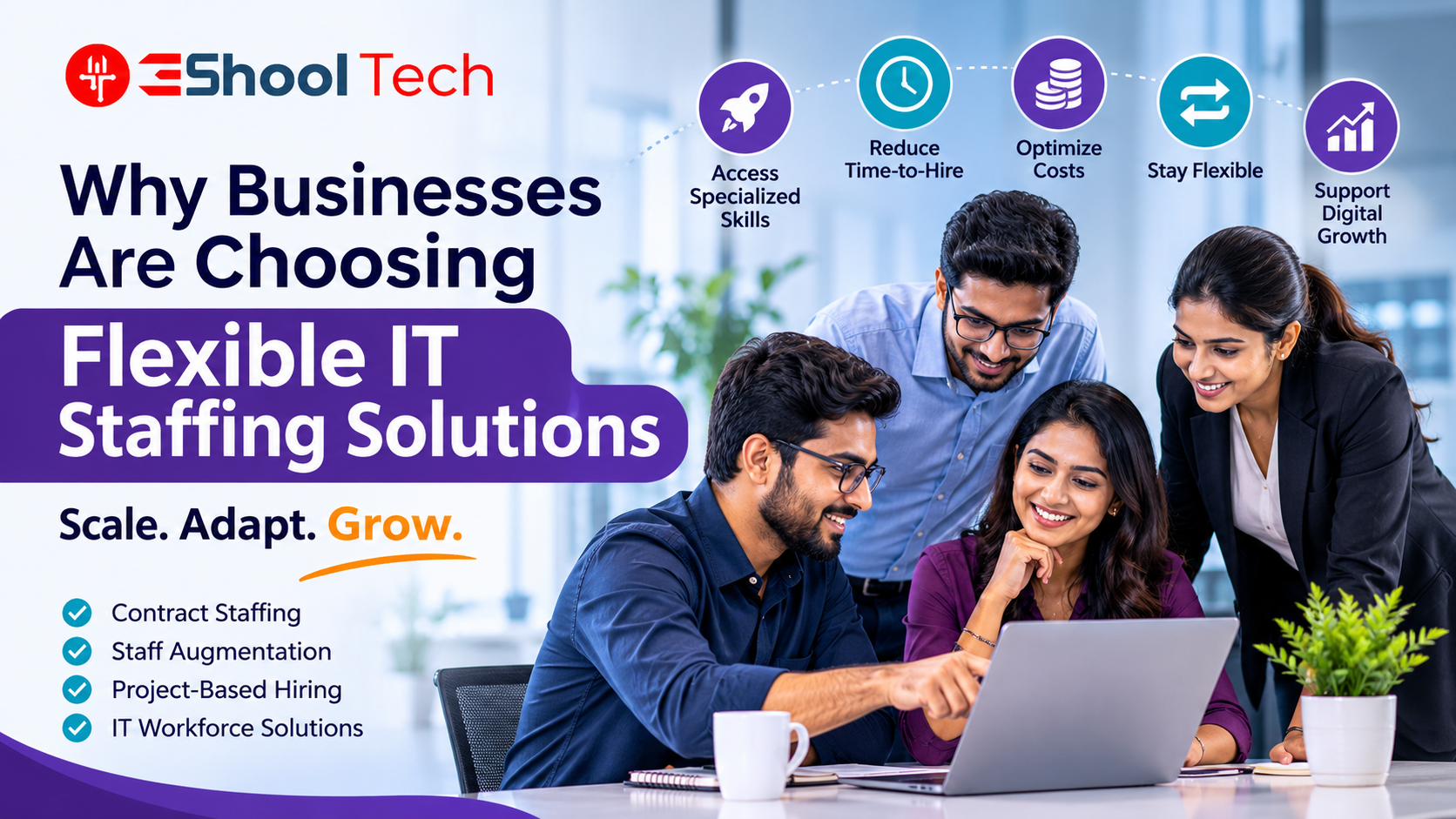
 The technology industry is evolving rapidly, and businesses need skilled IT professionals to keep up with changing project requirements, emerging technologies, and customer expectations. However, maintaining a large permanent workforce can be challenging when technology needs fluctuate throughout the year.
Flexible IT staffing solutions are becoming an important option for businesses that need access to specialized talent without committing to permanent hiring for every position. From software development and cloud computing to cybersecurity and artificial intelligence, flexible staffing helps organizations adapt their workforce to changing business requirements.
For companies planning digital transformation or expanding their technology teams, flexible IT staffing can provide a practical approach to workforce management.
What Are Flexible IT Staffing Solutions?
Flexible IT staffing refers to hiring technology professionals based on specific business requirements, project timelines, or workload demands. Instead of recruiting every employee as a permanent team member, businesses can engage qualified professionals through contract staffing, temporary staffing, staff augmentation, or project-based arrangements.
These professionals may work alongside existing employees or support specific technology initiatives.
For example, a company developing a new application may need additional software developers for six months. Rather than expanding its permanent workforce, the organization can use flexible staffing to bring in professionals with the required expertise for the project.
Businesses can explore 3ShoolTech's IT staffing services to understand how staffing support can align with their technology hiring requirements.
Why Businesses Are Choosing Flexible IT Staffing
1. Access to Specialized Technology Skills
Technology projects often require expertise that may not be available within an organization's existing team. Businesses implementing cloud infrastructure, AI applications, cybersecurity systems, or enterprise software may need professionals with specialized technical knowledge.
Flexible staffing allows companies to access professionals with relevant experience for specific projects.
For example, an organization migrating its applications to the cloud may require AWS or Azure specialists during the migration process. Once the project is completed, the company may not need the same level of specialized support.
By engaging professionals according to project requirements, businesses can access technical expertise when it is needed.
2. Faster Recruitment and Team Expansion
Traditional recruitment can involve multiple stages, including job posting, application screening, interviews, assessments, and onboarding. These processes can take time, especially when companies are recruiting for specialized technical positions.
Flexible IT staffing can help businesses identify suitable professionals through established recruitment networks and candidate sourcing processes.
When a company needs additional developers, testers, cloud engineers, or data professionals, a staffing partner can help coordinate candidate identification and screening.
The actual hiring timeline depends on the role, candidate availability, experience requirements, and recruitment process. However, a structured staffing approach can help organizations respond more effectively to urgent workforce requirements.
3. Better Workforce Cost Management
Maintaining a large permanent technology team can involve ongoing expenses such as salaries, employee benefits, training, and recruitment costs.
Flexible staffing provides businesses with another way to manage workforce requirements according to project needs.
Organizations can engage additional professionals when workloads increase and reassess staffing requirements as projects progress.
However, flexible staffing is not always less expensive than permanent hiring. Contract rates may be higher, and businesses should consider the complete cost of each staffing arrangement, including recruitment fees, onboarding, contract administration, and project management.
The most suitable approach depends on project duration, required expertise, and long-term workforce needs.
4. Greater Flexibility for Project-Based Work
Technology projects often experience changing requirements. A company may need additional developers during product development, cybersecurity specialists during a security assessment, or data engineers during a system migration.
Flexible staffing allows organizations to adjust their workforce according to project stages.
This approach can be particularly useful for:
-
Software development projects
-
Cloud migration initiatives
-
Enterprise application implementation
-
Cybersecurity assessments
-
Data analytics projects
-
Digital transformation programs
Businesses can plan staffing requirements around project milestones and operational priorities.
5. Support for Digital Transformation
Digital transformation often requires organizations to adopt new technologies, modernize existing systems, and improve business processes.
These initiatives may require skills that existing employees do not currently possess.
Flexible staffing can help businesses access professionals with relevant experience in AI, automation, cloud computing, data engineering, and enterprise software.
For example, an organization implementing an AI-powered customer service platform may need AI engineers, data specialists, and software developers during different stages of implementation.
Bringing in specialized professionals can help supplement existing teams while employees continue managing their regular responsibilities.
Flexible IT Staffing vs Permanent Hiring
Both flexible staffing and permanent recruitment offer advantages. The right approach depends on the organization's workforce requirements.
| Factor | Flexible IT Staffing | Permanent Hiring |
|---|---|---|
| Hiring purpose | Project-based or changing requirements | Long-term business needs |
| Workforce flexibility | Can adapt to project requirements | Usually more stable |
| Specialized expertise | Useful for temporary skill gaps | Suitable for ongoing expertise |
| Employee commitment | Depends on the contract | Long-term employment relationship |
| Knowledge retention | Requires effective documentation | Supports long-term knowledge continuity |
| Best suited for | Projects, temporary demand, specialized skills | Core teams and ongoing responsibilities |
Businesses should not treat flexible staffing as a replacement for permanent hiring. A balanced workforce strategy may combine permanent employees with external professionals to support changing business needs.
How to Choose the Right IT Staffing Partner
Selecting an appropriate staffing partner is important for achieving successful recruitment outcomes.
Businesses should consider the following factors when evaluating an IT staffing company.
Technical recruitment expertise: Choose a partner that understands the technology roles, tools, and skills required for your projects.
Candidate screening process: Ask how candidates are evaluated and whether technical assessments, experience verification, and structured interviews are part of the process.
Understanding of business requirements: A staffing partner should understand project objectives, timelines, responsibilities, and the required experience level.
Communication and coordination: Clear communication helps businesses manage interviews, onboarding, and project expectations.
Workforce flexibility: Discuss available staffing arrangements and how they align with the company's operational requirements.
Businesses looking for recruitment support can explore 3ShoolTech and its IT staffing services to understand how specialized recruitment support may fit their hiring needs.
Challenges Businesses Should Consider
Although flexible staffing offers several advantages, organizations should plan carefully before engaging external professionals.
Some important considerations include:
-
Knowledge transfer: Businesses should document project processes and technical decisions to maintain continuity.
-
Data security: External professionals should follow appropriate access controls, confidentiality requirements, and security policies.
-
Team integration: Contract professionals need clear responsibilities and effective communication with permanent employees.
-
Contract management: Organizations should define project duration, deliverables, payment terms, and responsibilities.
-
Long-term workforce planning: Businesses should determine which roles require permanent employees and which can be supported through flexible staffing.
A structured onboarding process and clear expectations can help reduce these challenges.
Conclusion
Flexible IT staffing solutions provide businesses with an alternative approach to managing technology workforce requirements. By accessing specialized skills, supporting project-based work, and adapting team sizes according to demand, organizations can respond more effectively to changing technology needs.
However, successful staffing requires more than simply filling vacancies. Businesses must identify the right skills, establish clear project requirements, and ensure that external professionals integrate effectively with existing teams.
A balanced workforce strategy that combines permanent employees with flexible staffing can help organizations maintain operational stability while supporting innovation and growth.
For businesses seeking additional technology talent, partnering with an experienced IT staffing provider can help simplify recruitment and align workforce capabilities with project objectives.
Frequently Asked Questions (AEO)
1. What are flexible IT staffing solutions?
Flexible IT staffing solutions allow businesses to hire technology professionals according to project requirements, workload demands, or specific skill needs. Common arrangements include contract staffing, temporary staffing, and staff augmentation.
2. Why are businesses choosing flexible IT staffing?
Businesses choose flexible IT staffing to access specialized skills, support project-based work, manage changing workforce requirements, and respond to technology needs without making every position permanent.
3. Is flexible IT staffing more cost-effective than permanent hiring?
Flexible IT staffing can help manage workforce expenses for temporary or specialized projects. However, overall costs depend on contract rates, project duration, recruitment fees, and the organization's long-term staffing requirements.
4. What is the difference between IT staff augmentation and flexible staffing?
Flexible staffing is a broad approach that includes different hiring arrangements. IT staff augmentation specifically involves adding external professionals to an existing team to support its capabilities or workload.
5. Which businesses benefit from flexible IT staffing?
Startups, growing businesses, technology companies, and organizations managing project-based work may benefit from flexible IT staffing when they need specialized skills or additional workforce capacity.
6. How can businesses find qualified IT professionals?
Businesses can define their technical requirements, use structured candidate assessments, evaluate relevant experience, and work with specialized IT staffing partners to identify suitable professionals.
7. Can flexible IT staffing support digital transformation?
Yes. Flexible staffing can help organizations access specialists in AI, cloud computing, cybersecurity, data engineering, and software development to support digital transformation initiatives.