
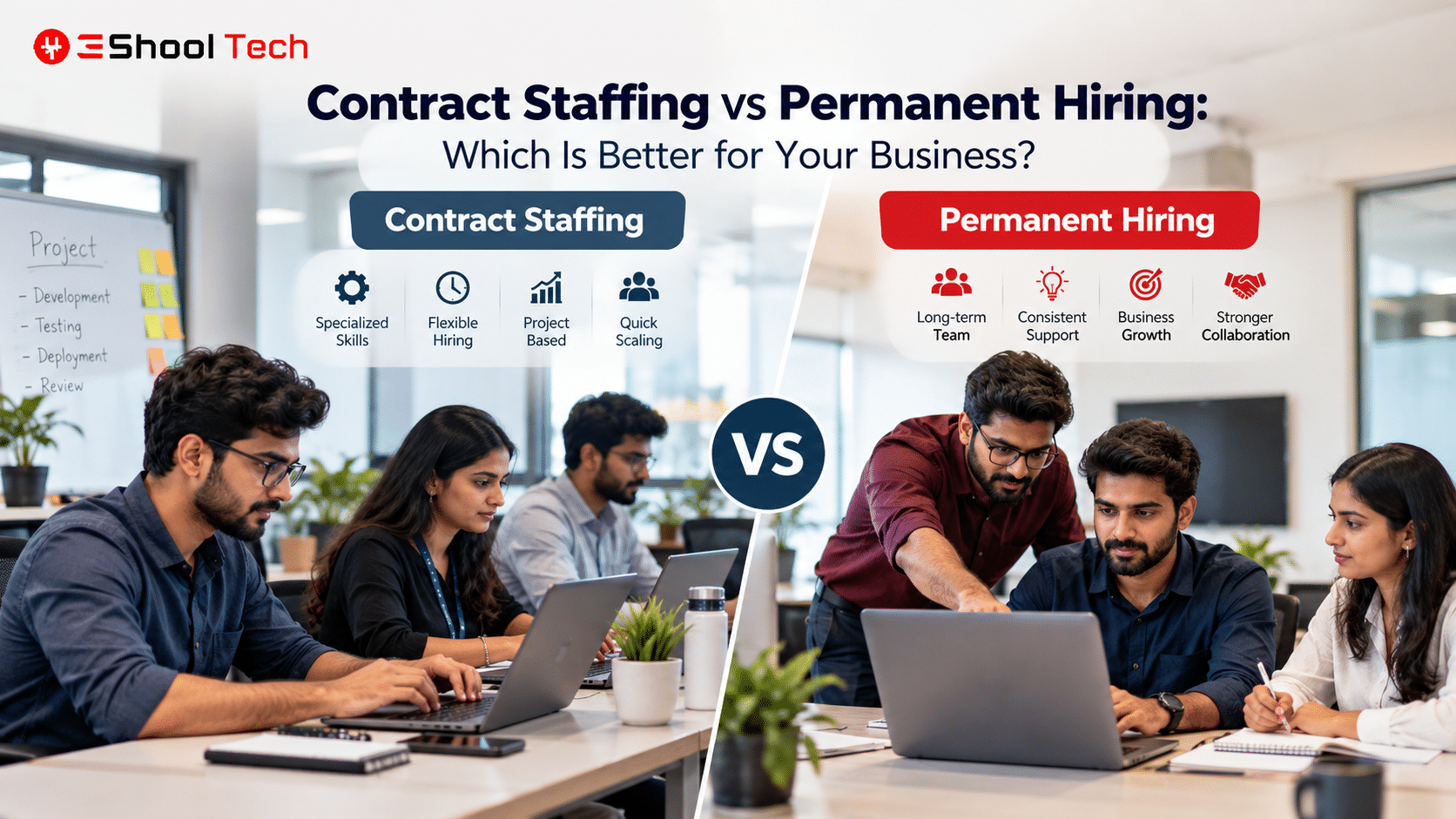
When a business needs more people, one question often comes up: Should we hire permanent employees or bring in contract staff? There is no single answer. The right choice depends on your project requirements, business growth, budget, and how long you need specific skills.
For IT companies especially, both contract staffing and permanent hiring can help build a strong workforce. The key is knowing when each model makes sense.
What Is Contract Staffing?
Contract staffing means hiring a professional for a specific project, role, or period. Businesses often use this model when they need specialized skills quickly or require additional support for a temporary workload. Contract professionals can be particularly useful for areas such as software development, cloud computing, cybersecurity, data engineering, and other technology projects.
For example, if your company has a six-month cloud migration project, hiring a cloud specialist on contract may make more sense than creating a permanent position.
What Is Permanent Hiring?
Permanent hiring means bringing an employee into your organization for an ongoing role. Permanent employees generally become part of the company’s long-term workforce and may take responsibility across multiple projects and business objectives.
This approach can work well when you have a consistent need for a particular skill and want to build long-term knowledge within your organization.
Contract Staffing vs Permanent Hiring: Which Is Better?
Choose Contract Staffing When:
- You need specialized skills for a specific project.
- Your workload has increased temporarily.
- You need to scale your team quickly.
- You are entering a new technology area and need expertise.
- You want workforce flexibility.
Contract staffing can provide access to specialized talent without making a long-term commitment to a role that may only be needed temporarily.
Choose Permanent Hiring When:
- The role is essential to your long-term business strategy.
- You need consistent support throughout the year.
- You want employees to develop deep knowledge of your business.
- Collaboration and long-term team development are important.
- You are building a core technology team.
Can You Use Both?
Absolutely. Many businesses use a hybrid hiring strategy. They maintain permanent employees for core functions while using contract professionals when they need additional expertise or project-based support.
For example, an IT company might keep its core software development team permanent while bringing in contract cybersecurity or cloud professionals for specialized projects.
Final Thoughts
So, contract staffing vs permanent hiring—which is better? The answer depends on what your business needs right now.
If you need flexibility and specialized skills for a defined period, contract staffing can be a practical option. If you are building a long-term team around critical business functions, permanent hiring may be the better choice.
The goal isn’t simply to hire more people. It’s to choose the right talent model for the work you need to accomplish.
FAQs
Is contract staffing cheaper than permanent hiring?
Not always. Contract staffing can reduce long-term commitments and certain overheads, but the overall cost depends on the role, contract terms, and required expertise.
When should a company choose contract staffing?
It is often suitable for temporary projects, urgent hiring needs, specialized skills, or periods of increased workload.
Can a contract employee become permanent?
Yes. A contract-to-permanent arrangement can allow a company to evaluate a professional before offering a long-term position.
Which is better for IT companies: contract or permanent hiring?
Neither is automatically better. IT companies can use contract staffing for specialized or project-based requirements and permanent hiring for critical long-term roles.
For more details ContactUs