
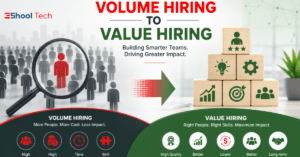
The IT hiring landscape is undergoing a major transformation. For years, companies focused heavily on volume hiring — recruiting large numbers of employees quickly to support rapid expansion, digital transformation projects, and aggressive business growth. However, in 2026, organizations are no longer measuring success by the size of their workforce alone. Instead, they are prioritizing value hiring, a smarter approach focused on quality, specialized skills, adaptability, and long-term business impact.
As technology evolves faster than ever, businesses are realizing that hiring the right talent is more important than hiring more talent. From startups to global enterprises, companies are shifting toward lean, high-performing teams that can drive innovation, improve productivity, and adapt to changing market demands. This shift is reshaping the future of IT staffing and redefining how businesses build successful technology teams.
What Is Volume Hiring?
Volume hiring refers to recruiting a large number of employees within a short period of time. This hiring model became common during periods of rapid digital growth, especially in industries such as IT services, BPOs, e-commerce, and customer support operations. Companies focused on filling multiple positions quickly to meet project deadlines and business expansion goals.
While volume hiring helped organizations scale faster, it also introduced several long-term challenges. Many businesses experienced higher employee turnover, inconsistent skill quality, and increased onboarding costs. In many cases, companies hired candidates based on immediate availability instead of long-term business value.
Common Challenges of Volume Hiring
- Increased employee attrition
- Higher training and onboarding costs
- Skill mismatches within teams
- Reduced productivity
- Difficulty maintaining consistent quality
- Greater pressure on HR and recruitment teams
As competition increases and technology becomes more specialized, businesses are finding that speed alone is no longer enough to build successful teams.
Understanding the Rise of Value Hiring
Value hiring focuses on recruiting professionals who can contribute meaningful business impact rather than simply filling open positions. Instead of prioritizing headcount, organizations are now looking for candidates with specialized technical expertise, problem-solving abilities, adaptability, and strong collaboration skills.
This hiring approach is especially important in today’s AI-driven business environment. Companies need employees who can learn quickly, work across technologies, and contribute to innovation. Businesses are increasingly investing in professionals who can deliver measurable results and support long-term growth strategies.
Value hiring also aligns with the growing trend of skills-based recruitment. Employers are placing greater emphasis on practical capabilities and real-world experience rather than relying only on degrees or certifications.
Why Companies Are Shifting Toward Value Hiring
Several major factors are driving this transition from volume hiring to value hiring across the IT industry. The changing economic environment, advancements in artificial intelligence, and rising demand for niche technology skills are all influencing hiring strategies.
Organizations today are under pressure to improve efficiency while managing operational costs. Instead of building large teams, businesses want smaller, highly skilled teams capable of delivering better outcomes. Hiring managers are becoming more strategic in identifying professionals who can contribute directly to business objectives.
At the same time, AI and automation are transforming traditional job roles. Many repetitive tasks are now automated, increasing the need for professionals with advanced technical and analytical skills. Companies are investing more in talent related to cloud computing, cybersecurity, DevOps, AI engineering, and data analytics.
Key Reasons Behind the Shift
- Growing demand for specialized IT skills
- Increased adoption of AI and automation
- Rising costs associated with bad hires
- Need for higher productivity and efficiency
- Focus on long-term employee retention
- Greater emphasis on innovation and business impact
Businesses are no longer asking, “How many people can we hire?” Instead, they are asking, “Who can create the most value for our organization?”
The Impact of AI on IT Hiring Trends
Artificial intelligence is significantly influencing recruitment strategies worldwide. Companies are using AI-powered tools for resume screening, skill assessments, interview scheduling, and candidate matching. While AI is improving hiring efficiency, it is also changing the type of talent companies need.
Organizations are now searching for professionals who can work alongside AI technologies and contribute to digital innovation. Employees with strong technical expertise and adaptability are becoming increasingly valuable in the modern workforce.
In addition, businesses are realizing that human skills such as creativity, communication, leadership, and critical thinking remain essential even in highly automated environments. This balance between technical capability and human intelligence is becoming a central part of value hiring strategies.
How Value Hiring Benefits Businesses
The move toward value hiring offers significant long-term advantages for organizations. Companies that invest in high-quality talent often experience better employee performance, stronger innovation, and improved project outcomes. Skilled professionals are also more likely to contribute positively to workplace culture and team collaboration.
Another major benefit is reduced hiring risk. By focusing on skills, experience, and long-term fit, companies can minimize costly hiring mistakes and improve retention rates. This creates greater workforce stability and allows organizations to scale more efficiently.
Benefits of Value Hiring
- Improved employee retention
- Higher team productivity
- Stronger business performance
- Reduced recruitment costs over time
- Better innovation and problem-solving
- Increased workforce adaptability
For many organizations, value hiring is becoming a competitive advantage in an increasingly digital economy.
The Growing Role of IT Staffing Companies
As hiring becomes more strategic, IT staffing companies are playing a bigger role in helping businesses access qualified talent quickly and efficiently. Modern staffing partners are no longer just recruitment providers — they are becoming talent advisors who help organizations build specialized, future-ready teams.
Companies like 3shooltech support businesses by identifying skilled professionals who match both technical requirements and organizational goals. With access to pre-vetted talent pools and industry expertise, IT staffing firms help organizations reduce hiring timelines and improve recruitment quality.
Staff augmentation models are also becoming increasingly popular because they allow businesses to scale teams flexibly without committing to large permanent workforces. This approach supports both cost efficiency and operational agility.
Skills Companies Prioritize in 2026
The modern IT workforce requires a combination of technical expertise and business adaptability. Employers are searching for professionals who can contribute beyond their core job responsibilities and help organizations navigate rapid technological change.
Most In-Demand Skills
- Artificial Intelligence and Machine Learning
- Cloud Computing
- Cybersecurity
- DevOps and Automation
- Data Engineering
- Problem-Solving Skills
- Communication and Collaboration
- Adaptability and Continuous Learning
Candidates who combine technical specialization with strong interpersonal skills are becoming highly valuable in today’s competitive hiring market.
Volume Hiring vs Value Hiring
The difference between these two hiring approaches reflects the changing priorities of modern businesses.
| Volume Hiring | Value Hiring |
| Focuses on large-scale recruitment | Focuses on quality talent |
| Prioritizes hiring speed | Prioritizes business impact |
| Supports short-term expansion | Supports long-term growth |
| Often based on availability | Based on specialized skills |
| Higher risk of attrition | Better retention potential |
This comparison highlights why many organizations are moving toward a more strategic hiring model.
The Future of IT Staffing
The future of IT staffing will be driven by agility, specialization, and skills-based hiring. Companies are expected to continue investing in lean teams capable of delivering high performance and innovation. Remote work, hybrid workforce models, and project-based staffing will also shape hiring strategies in the coming years.
Businesses that adapt to value hiring will be better positioned to compete in the digital economy. Organizations that focus on hiring skilled professionals with long-term potential will gain stronger productivity, improved workforce stability, and greater operational efficiency.
At the same time, candidates who continuously upgrade their skills and embrace emerging technologies will have greater career opportunities in the evolving IT industry.
Conclusion
The shift from volume hiring to value hiring represents a major change in how organizations approach talent acquisition. In a world driven by AI, digital transformation, and specialized technology skills, businesses are realizing that workforce quality matters more than workforce size.
Companies are no longer looking simply to fill positions quickly. They want professionals who can innovate, adapt, solve problems, and contribute measurable business value. This new hiring mindset is shaping the future of IT staffing and creating stronger opportunities for both employers and skilled professionals.
As businesses continue to navigate the evolving technology landscape, strategic hiring will become essential for long-term success. Organizations that invest in high-quality talent today will build smarter, stronger, and more resilient teams for the future.